Material utilization
Review nesting, tab strategy, and thickness consolidation to reduce offcut waste where geometry allows.
Sustainability in fabrication is practical: choose the right material thickness, nest efficiently, avoid unnecessary rework, make finish choices explicit, and keep quality records strong enough that parts do not get remade because an assumption was missed.
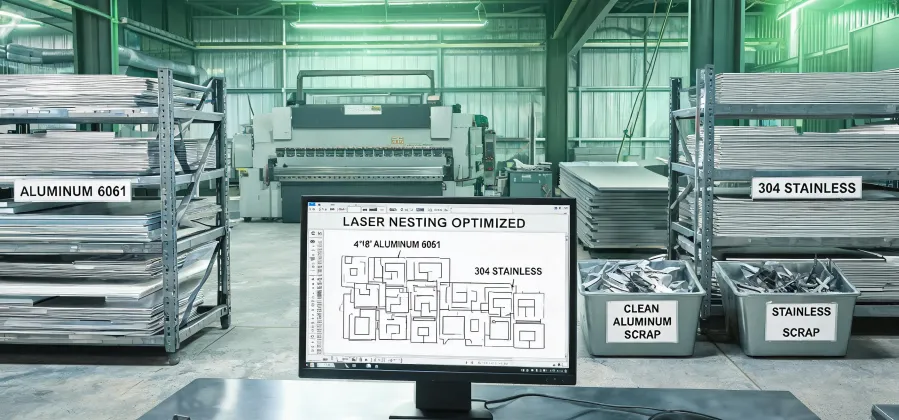
Oshcut treats environmental performance as an engineering outcome rather than a marketing claim. The highest leverage choices happen while the part is still digital: whether two profiles can share a sheet, whether a bend can remove a welded bracket, whether a cosmetic face needs a different handling note, and whether an over-tight tolerance will create avoidable scrap. The goal is to help buyers see these decisions early enough to act.
Review nesting, tab strategy, and thickness consolidation to reduce offcut waste where geometry allows.
Use clear bend, finish, and inspection assumptions to avoid remakes caused by incomplete RFQ context.
Keep material certs, finish notes, and shipment records available for customers with audit requirements.
Send the part file and the intended finish. Oshcut can flag geometry, material, and inspection assumptions that influence cost, waste, and repeatability.